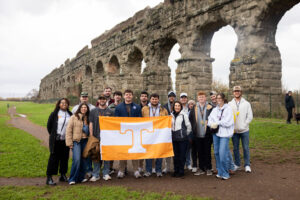
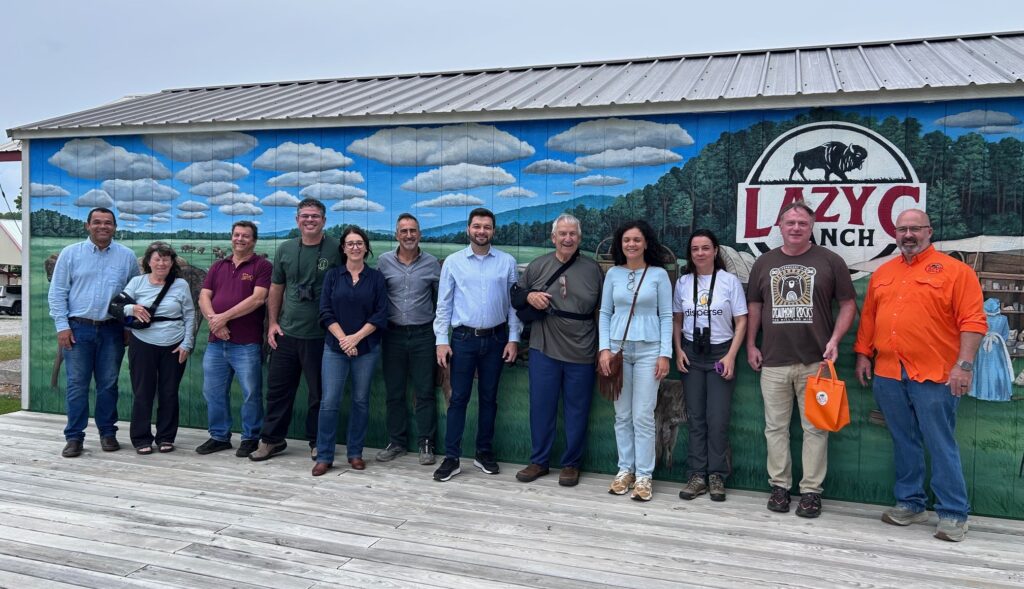
In April 2026, a delegation of ten Brazilian scientists arrived in Knoxville with a full schedule: a daylong workshop, time with individual faculty hosts, and a field visit to AgResearch and Education Centers across the state. The purpose behind the packed week was both simple and urgent—share knowledge and move faster on the shared challenge of feeding a growing world while conserving the resources that make agriculture possible.
The visit grew out of a partnership taking shape through a collaborative gateway developed by the UT Institute for Energy and Environment. The gateways are designed to bring faculty together across disciplines and connect strengths that can help solve complex problems. Under an Energy and Environment gateway project, the Smith Center for International Sustainable Agriculture is leading a UT team to deepen collaborations with Brazilian institutions.
Common Ground in Tennessee and Brazil
“Tennessee and Brazil share many interests in agriculture, natural resources, and energy, with both being central pillars of the global food system. We grow many of the same crops and raise similar livestock, and both rely on hydropower for part of our energy,” explains Hongwei Xin, dean of UT AgResearch.
“These similarities can drive competition in areas like soybean exports, but they also create opportunities to learn from each other. Global research collaborations like this are important because they bring together complementary expertise, expand resources and perspectives, and speed up progress in tackling shared challenges.”
A Partnership Years in the Making
While the April 2026 visit felt like a milestone, the relationship has been developing for years. UTIA faculty have had individual engagements with Brazil that laid the groundwork for a broader collaboration.
“More than ten years ago, UTIA delegations developed initial partnerships with institutions in São Paulo and Manaus,” says Tom Gill, professor and director of the Smith Center, describing the origins of the project.
“These have led to some individual collaborations and have grown further with the hiring of three Brazilian faculty in the Departments of Plant Sciences and Animal Science—Renata Oakes, Bruno Pedreira, and Saulo Zoca—who have all brought Brazilian exchange students to Knoxville and the Middle Tennessee AgResearch and Education Center at Spring Hill over the past few years.”
From Conversations to Collaboration
For faculty involved, the partnership is a chance to build on the points of connection between the two regions—and to expand what’s possible through shared work.
“Since I was hired at UTIA, our leadership has encouraged me to strengthen relationships with Brazilian institutions. We already have some colleagues working together, but Brazil and Tennessee have a lot in common,” says Pedreira, UT Extension forage specialist and associate professor in the Department of Plant Sciences. Pedreira also is director of the UT Beef and Forage Center and coordinator of the Tennessee Master Forage Program.
“There is still much that can be accomplished through collaboration, and this partnership has strong potential to support growth in sustainable agriculture for both regions,” he adds.
A 2025 visit by a UTIA delegation to Brazil helped identify shared research interests related to energy and the environment with institutions in Minas Gerais and São Paulo states. Those connections led to an online seminar series in fall 2025 and early spring 2026, introducing researchers from UT and major Brazilian institutions, including the University of São Paulo, the Federal University of Lavras, and the Brazilian Agricultural Research Corporation (Embrapa).
A Week on Rocky Top
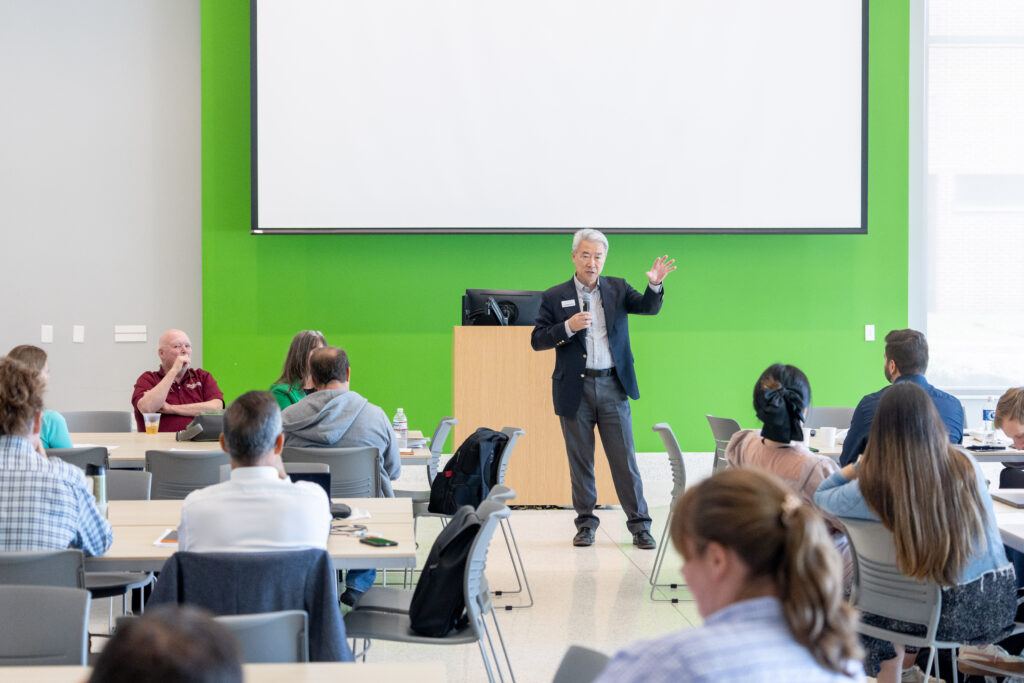
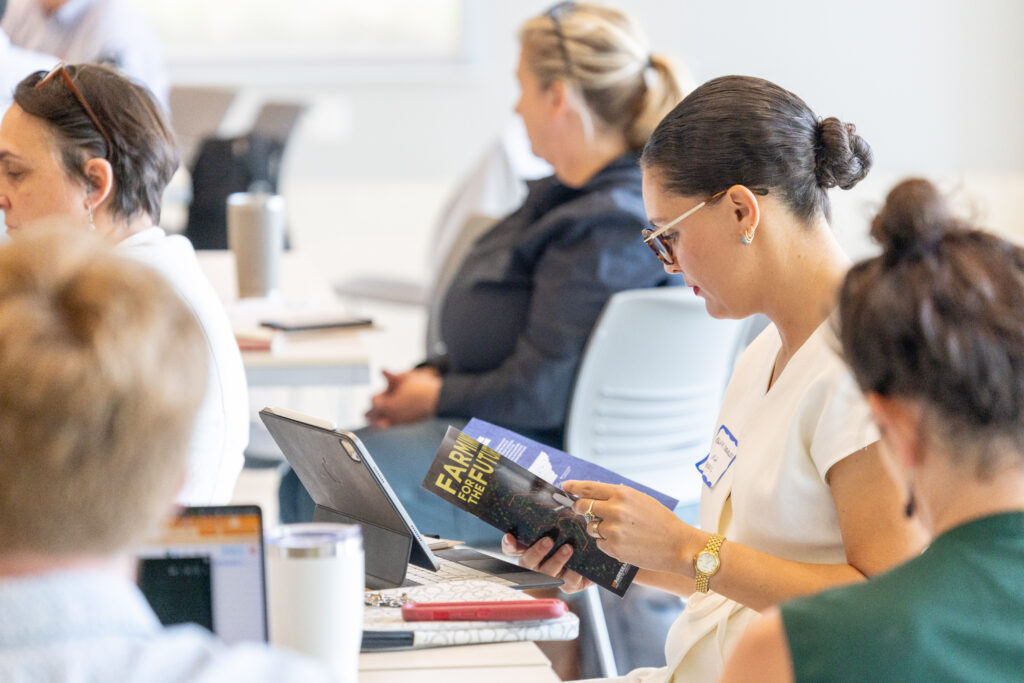
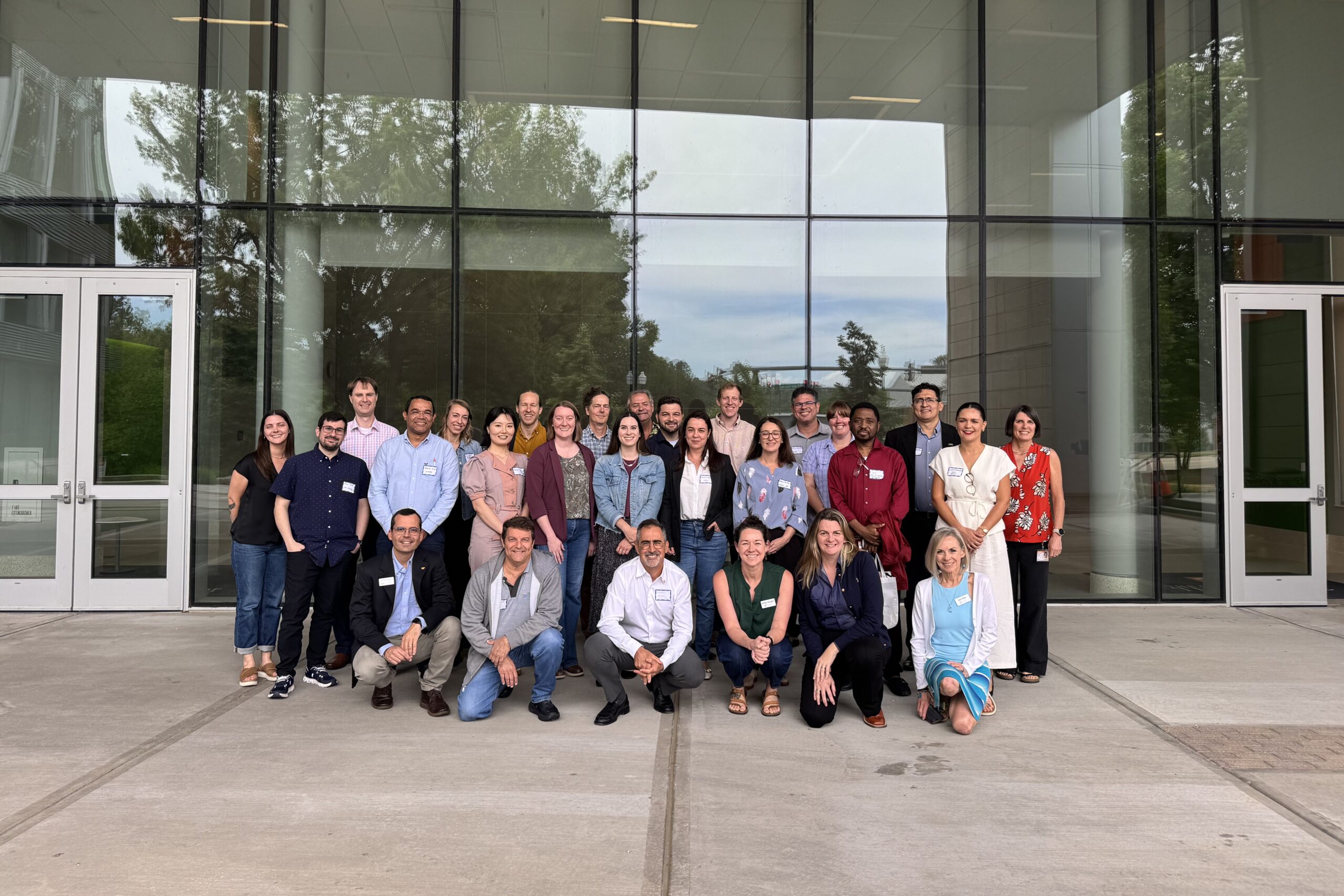
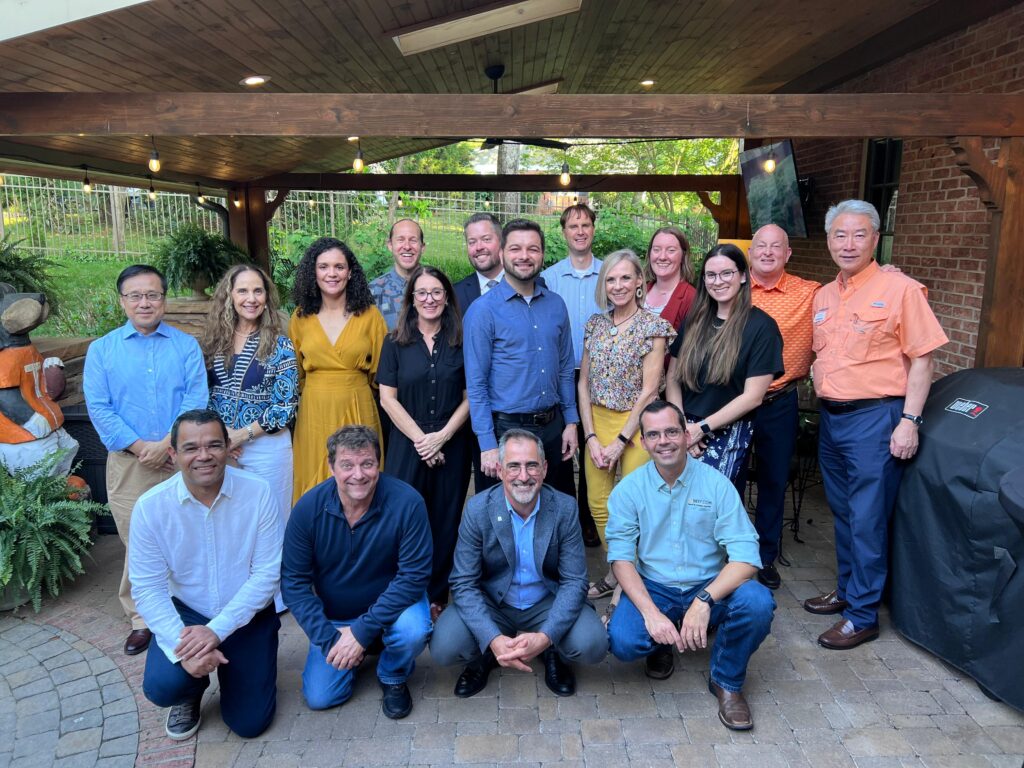
The Smith Center built on that momentum by hosting the April 2026 delegation in Knoxville. Over the course of the week, Brazilian scientists and UT faculty gathered for a workshop organized around shared interests—precision cropping systems, sustainable livestock systems and circular bioeconomies, and One Health natural resource conservation and biodiversity— alongside a field visit and one-on-one time with hosts.
The visit was co-hosted by the Beef and Forage Center and the Smith Center, and engaged faculty from the UT College of Veterinary Medicine and the Departments of Animal Science, Plant Sciences, and Biochemistry and Cellular and Molecular Biology.
“We were fortunate to have the opportunity to host this group of Brazilian scientists on campus,” says Hans Goertz, assistant director of project development with the Smith Center. “The delegation represented a range of disciplines and institutions across Brazil. There was something of interest for faculty and students from many departments across UT. Our guests brought fresh perspectives and ideas for addressing the grand challenge of feeding a growing population while conserving our critical resources.”
Learning From Each Other
Elaine Maria Dorneles, a faculty member with the Department of Veterinary Medicine at the Federal University of Lavras, participated in the workshop and was hosted by the UT One Health Initiative. Dorneles emphasized how much stronger partnerships like this can make both Tennessee and Brazil.
“I think the most valuable thing is that we can learn from each other. We bring different experiences, different ways of doing things, and different ways of thinking, especially when it comes to how we raise questions,” she says. “By combining the best from each side, I’m confident we’ll build stronger solutions together. When we work as one team, we can advance our shared knowledge and create something meaningful.”
What Comes Next
Partnerships like these create opportunities for faculty to enrich teaching, research, and Extension programming through joint proposals and exchange opportunities for students, staff, and faculty.
“These additional opportunities allow UT faculty to diversify their funding sources and grow the visibility and networks for their programs,” Gill explains. “They raise the visibility and hence the recognition of UT as a leader among US land-grants in global engagement.”
Impacts of the project are already emerging in strengthened ties between UT and Brazilian institutions.
“We have increased collaboration among faculty and created new opportunities for student exchange,” says Pedreira. “These initial efforts are building a strong foundation for long-term relationships in research, education, and Extension.”
Pedreira hopes the work continues to grow.
“By joining efforts, Brazilian institutions and UT can leverage broader international resources to build larger research programs, advance science, expand student exchange, and contribute to feeding a growing global population,” he says. “I hope we will continue working together to develop new strategies and technologies that will help define the future of agriculture in Tennessee and beyond.”
Explore More on
Features
MORE FROM THIS ISSUE