“As you’re listening to that heartbeat, I want you to remember that there’s a very grateful client outside the room whose heart is beating for that animal.”
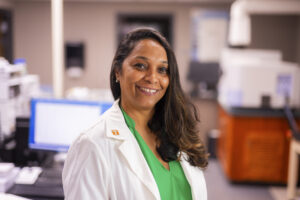
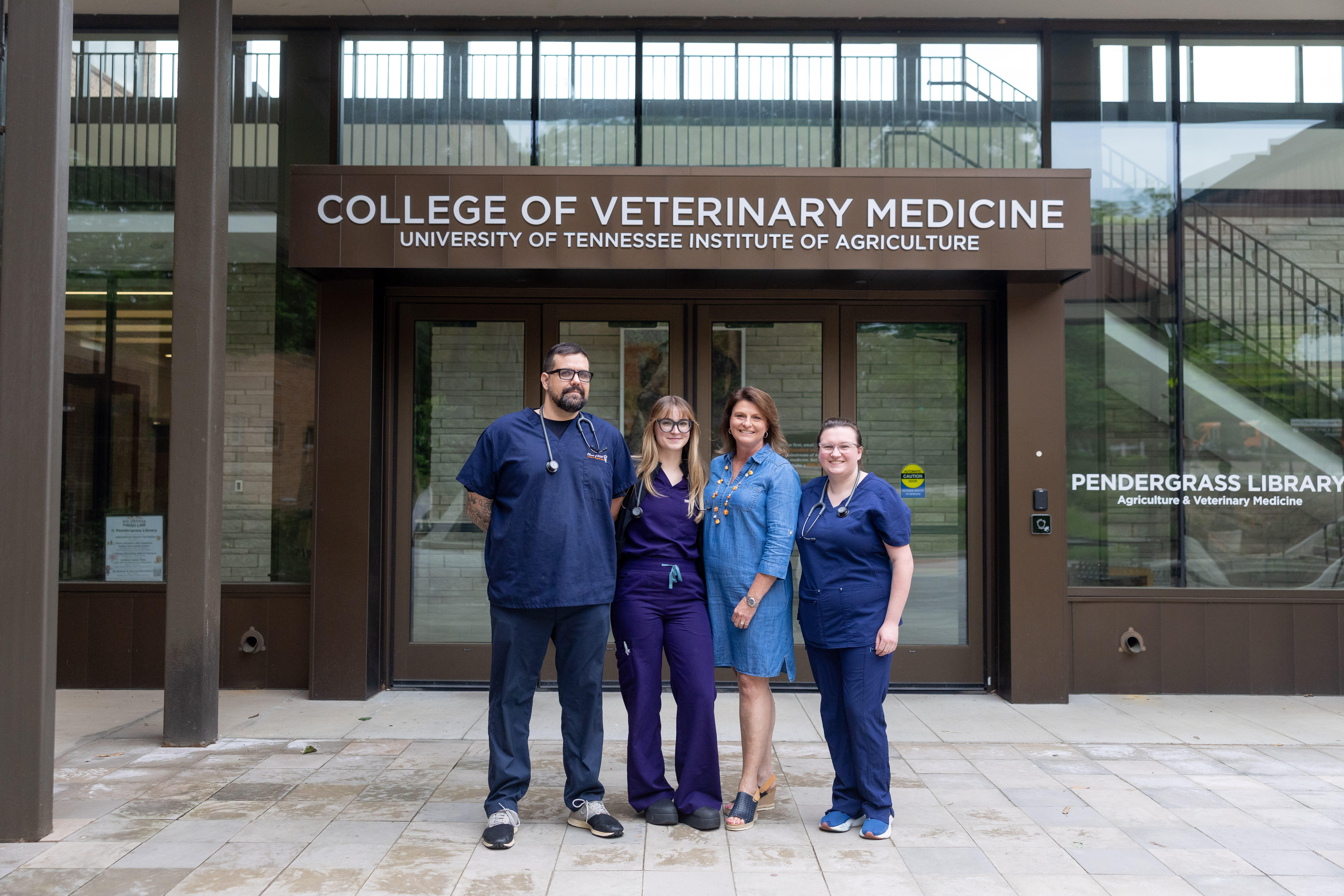
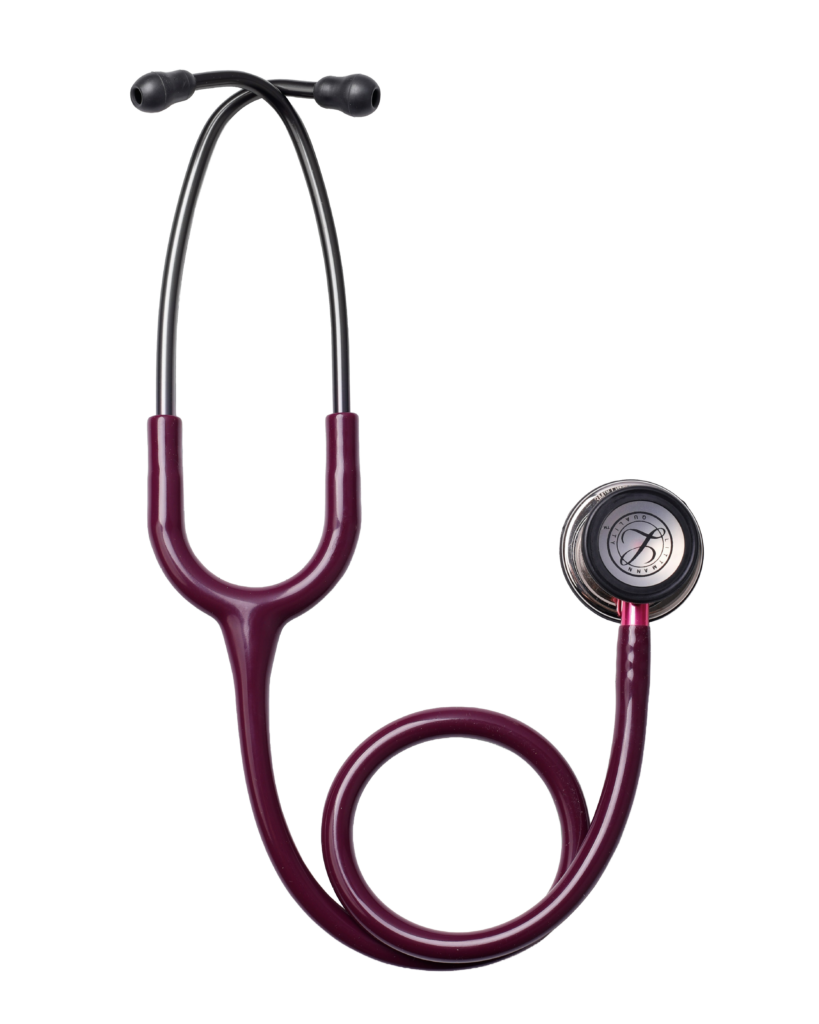
This line has become a hallmark of Claudia Hardy Amidon’s annual address to first-year students at the UT College of Veterinary Medicine’s white coat ceremony, where each student is gifted a new stethoscope by Claudia and her husband, Tom. The gesture reflects Claudia’s medical background and her love for animals and the people who care for them.
Raised on a farm in White Pine, Tennessee, Claudia was encouraged to go into medicine by her father, a World War II medic. After earning her doctorate in pharmacy, she established a clinical practice at Fort Campbell where Tom was stationed and later transitioned into the pharmaceutical industry. She now serves as a senior director at the global biopharmaceutical and healthcare company Merck, leading a team of pharmacists and physicians—but she would rather talk about her cat, Bandit.
Bandit was, by Claudia’s description, her best friend. Late one evening, while Claudia was traveling for work, Tom called in a panic: Bandit had suffered multiple seizures. Referred to the University of Tennessee Veterinary Medical Center for specialized care, Claudia drove through the night, arriving at 2 a.m. to find a very sick cat and no clear idea of what to expect.
“Everyone we met, from the front desk to faculty and staff, and the person cleaning up the waiting room, was incredibly kind and compassionate,” she remembers. Bandit was diagnosed with a meningioma, a brain tumor treatable temporarily with surgery. The procedure worked, though recovery included harrowing complications. When Bandit was slow to recover from anesthesia, neurology resident Lindsay Williams called them back to the intensive care unit. “She noted that, whenever Bandit heard my voice, his heartbeat started picking up,” Claudia says. “He started breathing on his own!”
The tumor eventually returned, and when Bandit died, the Amidons’ grief was real but so was their gratitude—for the additional two years of companionship with Bandit and the kindness and care they had received. After saying goodbye, the couple walked across campus, knocked on the door of assistant vice chancellor of development Tom Looney, and said they wanted to do something lasting for the college. Their first commitment created the Bandit Amidon Veterinary Medicine Scholarship Endowment for students interested in rural veterinary practice, followed soon after by a second endowment honoring another cat, the Bristol Amidon Veterinary Medicine Scholarship for Rural Practice Endowment.
The gifts marked the beginning of a deeper relationship with the college. “That’s kind of the overall journey,” Claudia says. “It all started with Bandit and showing up here and receiving such wonderful compassion and support.” When the couple learned many incoming vet students could not afford their own stethoscopes, they began funding those too, with plans underway to permanently endow the gift.
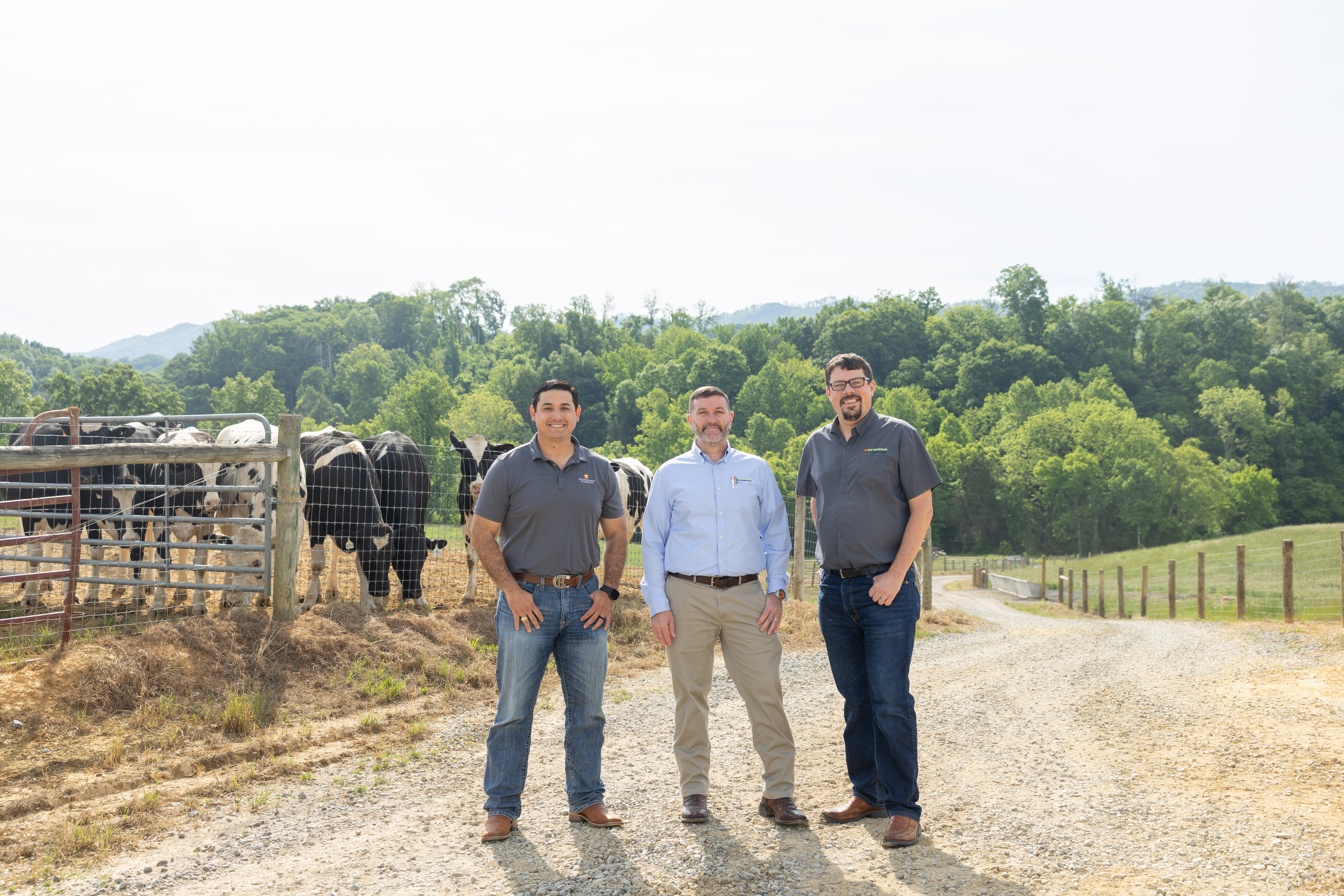
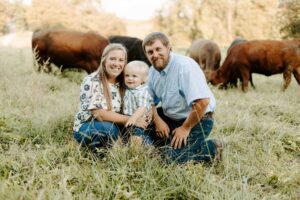
Supporting rural veterinary practice wasn’t incidental. Claudia and Tom have returned home to White Pine, where they now raise cattle on twenty-eight acres adjacent to the Hardy family farm, and she has seen firsthand what it means to depend on veterinary care. “What if we were an hour, two hours, three hours away from the nearest vet?” she asks.
That question has become more pointed as the shortage has become measurably real. Tennessee has four federally designated critical priority veterinary shortage areas—in West Tennessee, East Tennessee, the Cumberland Plateau, and the south-central region— and three of the four have cycled through prior federal nomination rounds without attracting a single practitioner.
The economics tell much of the story. Food animal and mixed-practice vets earn roughly 25 percent less than companion animal practitioners while carrying the same heavy debt loads. Only 3.4 percent of the national veterinary workforce works in food animal practice, and the consequences in Tennessee are tangible. Across the state’s four shortage regions, nearly 178,000 cattle and hundreds of thousands of poultry have little or no nearby veterinary care, with implications beyond the farm for food safety and biosecurity.
The college has made rural practice a top priority, and the Amidons are proud to play a role.
“I feel like the college is an extended family,” Claudia says. “When they have events, I love to come because I love catching up, seeing the growth, seeing the students, the faculty, the staff. That passion and purpose that you see in everybody, no matter what they’re doing, fuels my fire.”
Explore More on
Features
MORE FROM THIS ISSUE