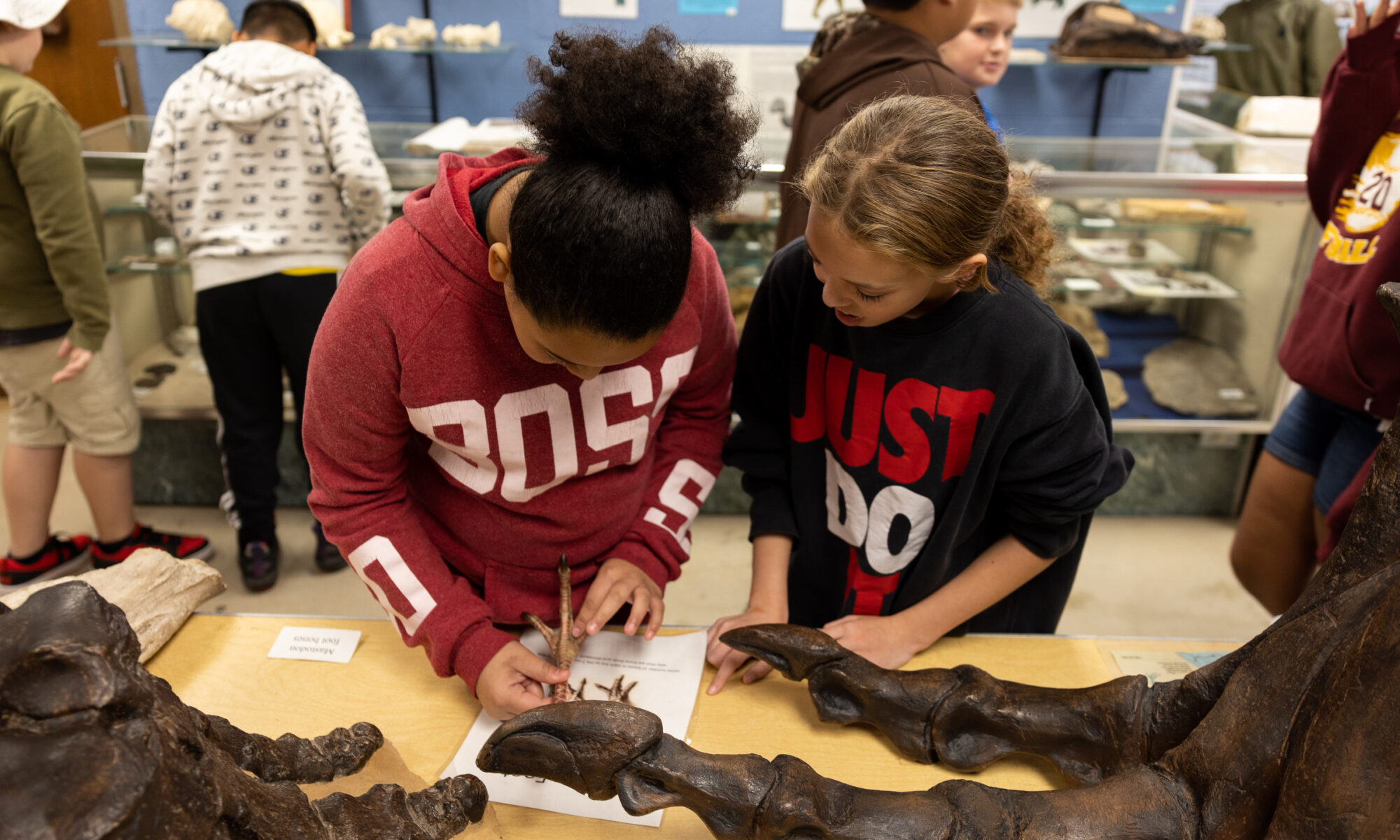
Jennifer King watches her second graders from Toone Elementary crouch in the grass, turning over a log with careful hands. With magnifying glasses pressed close, they spot the tiny creatures underneath—pill bugs, beetles, the wriggle of something quick disappearing into the soil.
Later, the students visit a kitchen garden to talk about how food is grown. Then it’s to the chicken pen to connect the life cycle of poultry to the eggs they might eat for breakfast.
“I’ve seen students experience hands-on opportunities that truly bring STEM concepts to life,” says King, who brings youth from the Toone, Tennessee, school to the 4-H and Youth Development Center at Lone Oaks Farm multiple times each year. “Lone Oaks’ unique activities outside the four walls of a classroom enable students to discover and explore as they engage with STEM and reading in an interactive, real-world setting.”
A year-round classroom beyond school walls
Teachers like King—and leaders of the Tennessee 4-H Youth Development program—are excited about what’s coming next for the state’s K–12 students: expanded science, technology, engineering, and mathematics learning at Tennessee’s four 4-H Centers.
The centers are known for the 4-H summer camps they host each year, serving 5,000 to 6,000 youth annually. They also operate year round as destinations for grade-level appropriate, standards-based, out-of-classroom experiences in science and the natural world.
Each year, more than 15,000 students visit for hands-on learning in STEM and other experiences. With new facilities on the way, that capacity is expected to grow to 50,000 to 60,000 students a year.
What the investment will build
A special allocation of $45.25 million in state funding paves the way for new STEM centers at three of the state’s 4-H Centers. At the fourth center, Lone Oaks Farm in West Tennessee’s Hardeman County, the funding will support additional cabins for overnight stays to engage in that center’s existing STEM center.

Governor Bill Lee and the General Assembly’s special funding supports construction of dedicated STEM centers at the W.P. Ridley 4-H Center in Columbia, Tennessee; the Clyde M. York 4-H Center in Crossville, Tennessee; and the Clyde Austin 4-H Center in Greeneville, Tennessee.
“We are elated for this historic investment from Governor Lee and the Tennessee General Assembly,” says Keith Carver, senior vice chancellor and senior vice president of the UT Institute of Agriculture.
“We know the experiences the new STEM centers will offer are going to change lives and create a world of opportunities for Tennessee youth by enhancing their education, broadening their horizons, and increasing their workforce readiness for careers in STEM fields.”
Why new STEM centers matter—especially in bad weather
The 4-H centers have always engaged in extensive STEM education, but the new buildings will expand and strengthen those efforts with upgraded technology and interactive lab areas built for hands-on, inquiry-based learning.
The new facilities also will make programming more reliable. Sheltered indoor areas during rain events—and heated spaces during colder months—will help ensure field trips don’t have to be rescheduled when weather changes.
At the newest 4-H center, Lone Oaks Farm, the funds will support construction of additional cabins that double the center’s ability to host overnight trips. The new lodging could allow Lone Oaks to host up to 128 students at a time, enabling multi-day STEM learning opportunities and recreational programs for entire grade levels.
A statewide pipeline for curiosity and careers
For students, the value is immediate: real experiences that make STEM concepts stick. For families and communities, the long-term payoff is bigger: more young Tennesseans building the curiosity, confidence, and skills that will shape their futures and help strengthen the state’s workforce.
For King, the impact is visible in small moments: a child leaning closer to the magnifying glass; a student connecting a garden bed to a dinner plate; a new question sparked by a simple discovery: What lives under this log?
Soon, more students across Tennessee will have access to those moments, rain or shine.
Explore More on
Features
MORE FROM THIS ISSUE