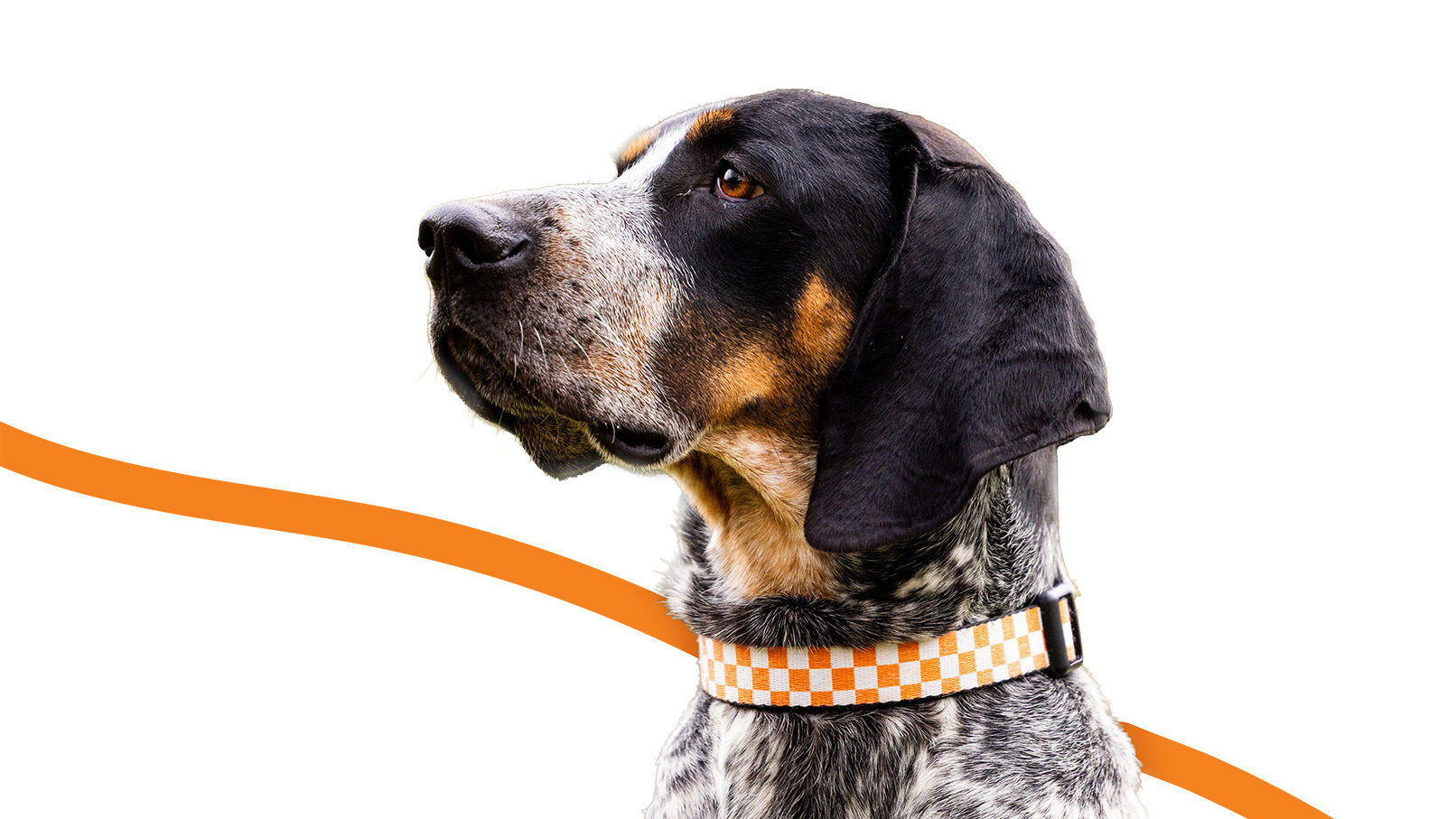
Before hearing the full roar of Neyland Stadium on a football Saturday, Smokey XII had been learning the quieter basics of the job since January.
The two-year-old bluetick coonhound spent much of his previous life as an outdoor dog and had to adapt to life inside a home, learn basic manners, and become comfortable with new routines, new environments, and a growing circle of people. Those first steps matter. Before a dog can represent the Volunteer spirit on game day, he has to feel secure in everyday life.
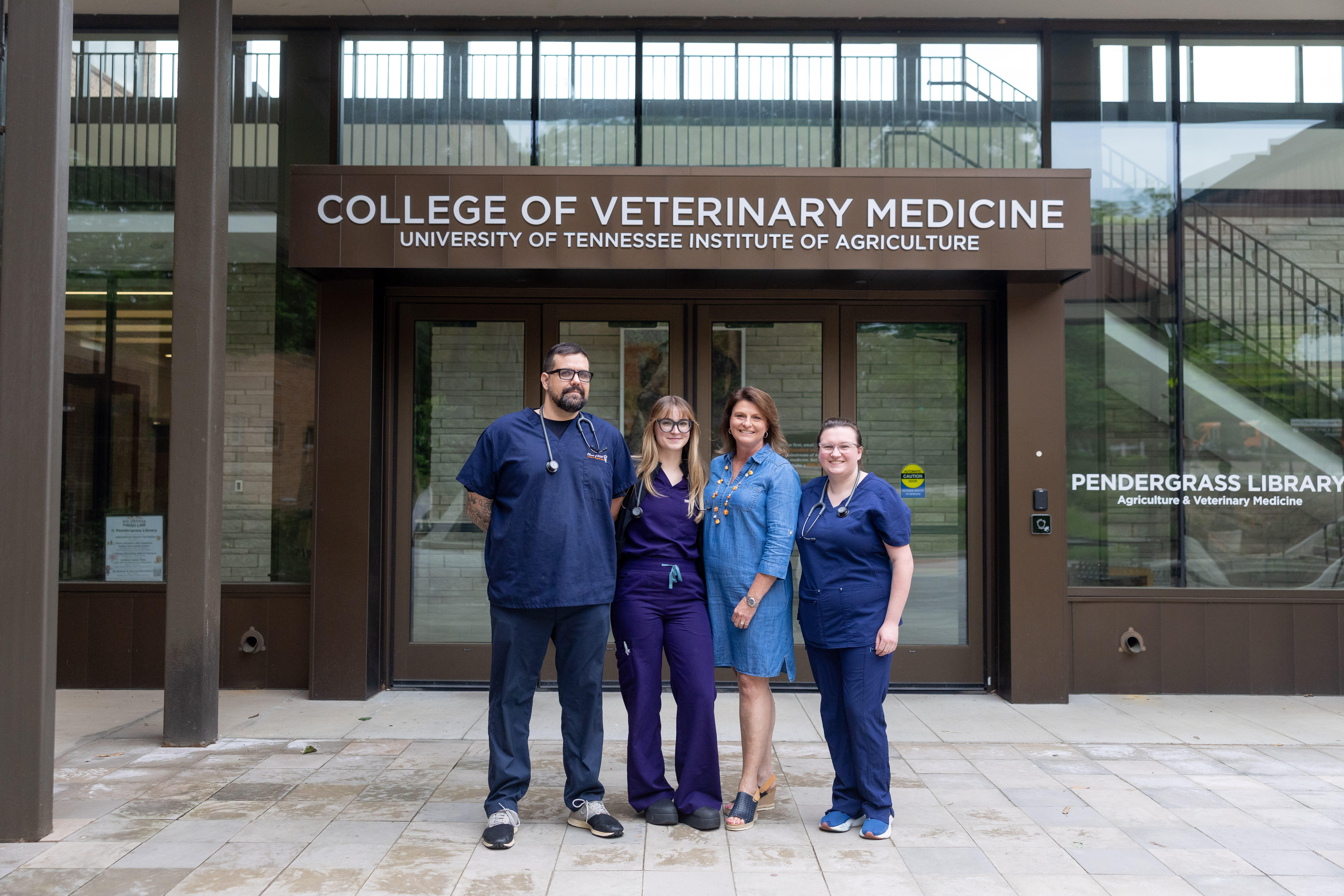
Known as Neyland, the journey for the next mascot at the University of Tennessee, Knoxville, began far from the spotlight. His original owners could no longer provide the care he needed, so a devoted dog lover stepped in, determined to help him find a loving permanent home. Kaleena Scarbro, a veterinary technician at the UT College of Veterinary Medicine and a member of the team searching for a new mascot since Smokey XI’s retirement in 2025, heard about a promising candidate through word of mouth in the East Tennessee Bluetick Coonhound rescue community. The rescue dog with a bold, friendly, and curious personality had all the makings of a successful walk-on Smokey mascot.

A New Era for the Live Mascot Program, With Tradition Intact
This year marks the first time the veterinary college is overseeing the live mascot program, bringing a science-based approach to every aspect of Smokey’s development. “This is certainly not an easy job, and not just any dog could do this. It is critical that we work with an animal who thrives on attention and intense energy while being resilient in the face of the stressors he may encounter,” says Zenithson Ng, a researcher of animal-assisted interventions and a clinical professor at the college.
“We can use objective measures to determine the welfare state of Neyland. By knowing who he is inside and out and expertly reading his signals, we can monitor and strive to elevate his well-being. We want a mascot with a big personality who lives to touch hearts and lift spirits, kind of like the ultimate therapy dog. And he can only do that if he’s having a good time. It’s a big job, but somebody’s got to do it, and we are thrilled to have found this very special pup who appears to have what it takes.”
Smokey’s story began in 1953, when the UT Pep Club went looking for a hound that was easygoing, loyal, and full of spirit. The Reverend William C. Brooks’s bluetick coonhound, Blue Smokey, won the contest and launched a Rocky Top tradition. In the early 1990s, care of Smokeys passed to Brooks family relatives Earl and Martha Hudson. Around that same time, the veterinary college became more directly involved in the mascot’s care, helping shape the approach that continues today.
Training for Confidence—and Preparing for Big Moments
That approach is grounded in one simple principle: The mascot’s well-being comes first. Positive reinforcement and reward-based training, toys, treats, and praise are used to make appearances feel fun and engaging, helping Neyland associate official responsibilities with excitement. Handlers and veterinary experts closely monitor his behavior and responses, using science and observation to determine what is best for him.
Julia Albright (MA psychology ’01, DVM ’05) is a veterinary behavior specialist, professor, and member of Neyland’s team. Albright says his preparation has centered on early training, consistency, and a slow introduction to new experiences. “We’ve been working on foundations and basics, but there are still unknowns,” she says. “The Orange and White Game this spring gave us a chance to see how he responded to that kind of environment. We keep animal welfare top of mind and respect him when he’s telling us he needs a rest.”
That philosophy also extends to game-day preparation. The sights, sounds, and energy of Neyland Stadium are unlike anything most dogs will ever experience. Preparing for that kind of environment takes more than obedience training. It requires gradual exposure, careful observation, and a willingness to let the dog set the pace.
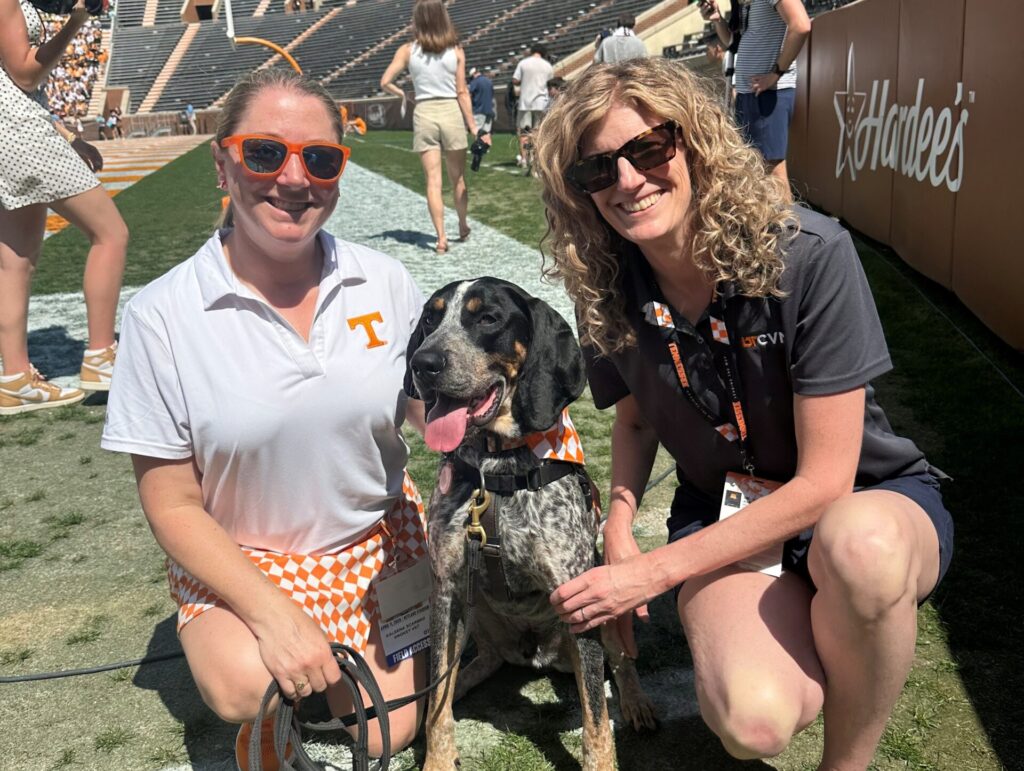
At games, that means Neyland works on his own timeline. If he is energized by the atmosphere, soaking in the crowd and howling along with the spirit of Vol Nation, he can stay longer. If he shows signs that he has hit his capacity, even early in an appearance, his team listens.
Three Handlers Learning Behind the Scenes
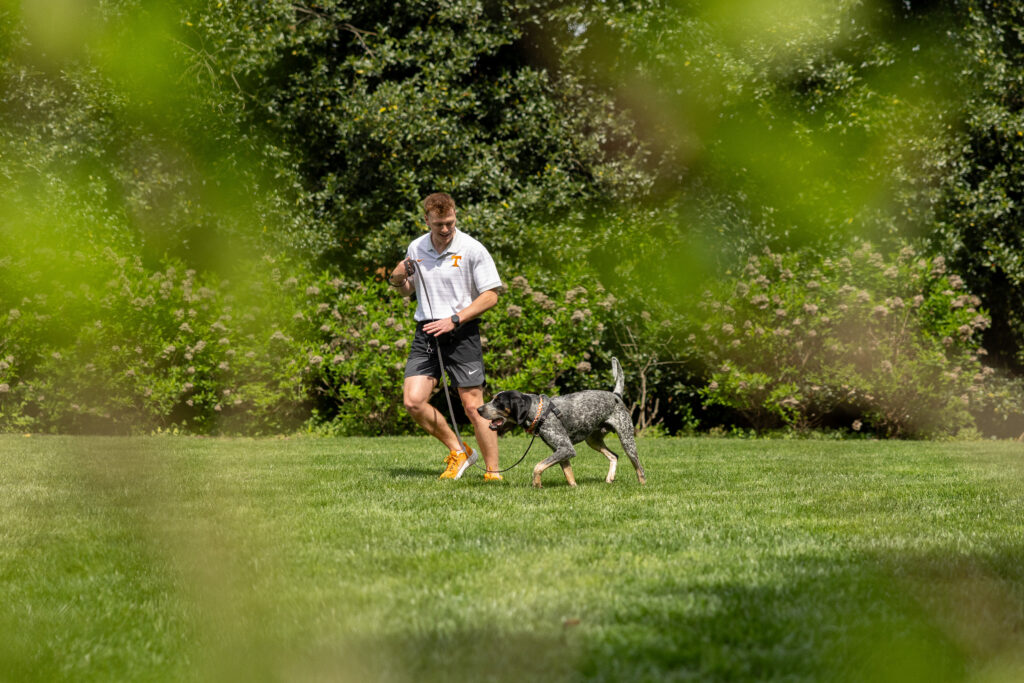
Smokey’s handlers, members of the Alpha Gamma Rho fraternity, are learning more than the basics of managing a high-profile dog. They are gaining firsthand experience in reward-based training, animal behavior, and the importance of reading canine body language.
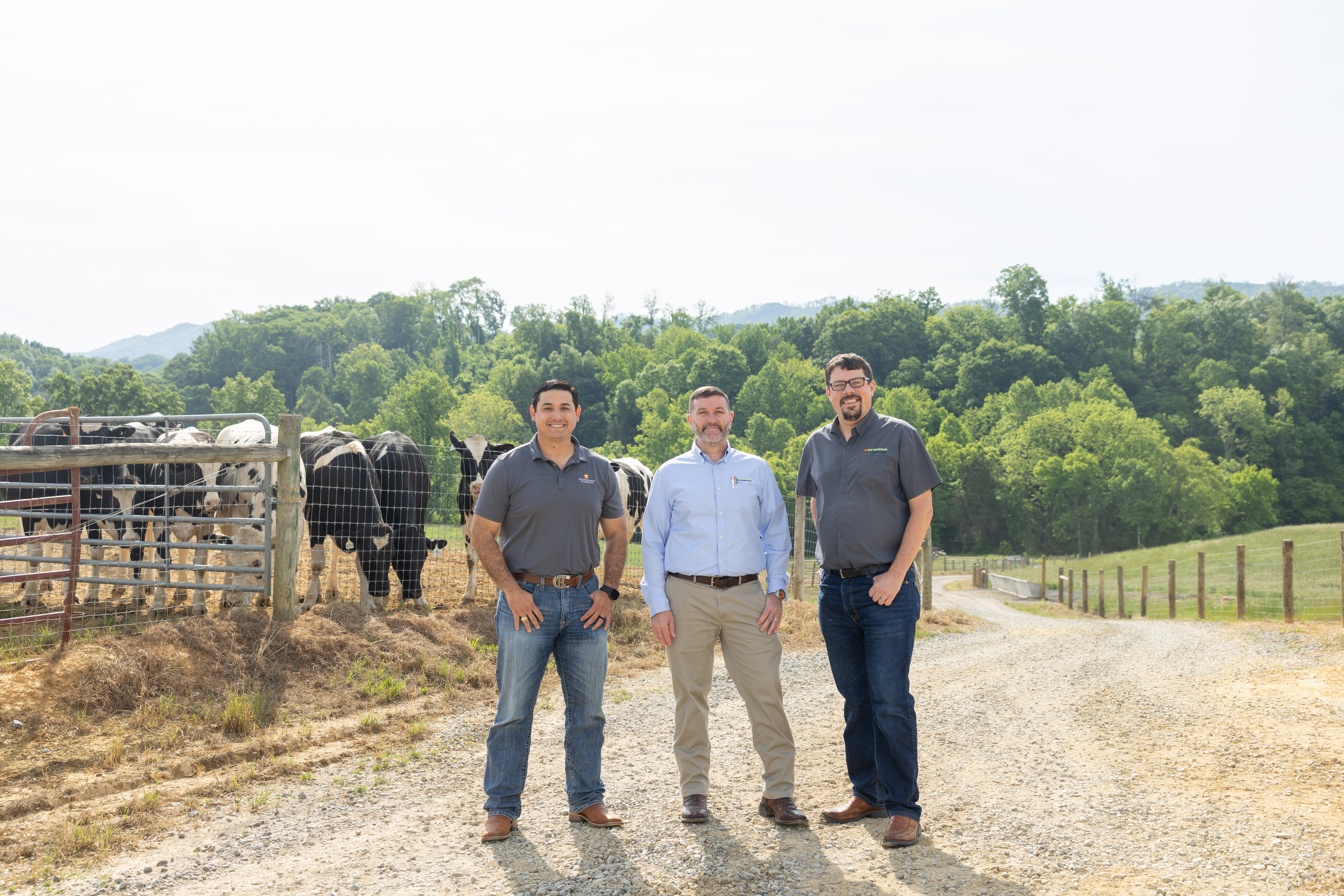
The 2026 handlers, senior Garrett Reeves and juniors Max Baldwin and Alex Katzakian, all student ambassadors at the Herbert College of Agriculture and all majoring in food and agricultural business, have been training side by side with Neyland almost from the beginning. Ng says that for the handlers to partner successfully with Neyland, they must first and foremost connect with and maintain a deep bond with him. “They are being trained to observe and analyze the behavioral cues that communicate his emotional state, allowing them to know when to encourage him and when to take a break. By making their interactions and trainings always fun and positive, they are helping advocate for what is best for him and understand that his well-being is the number one priority.”
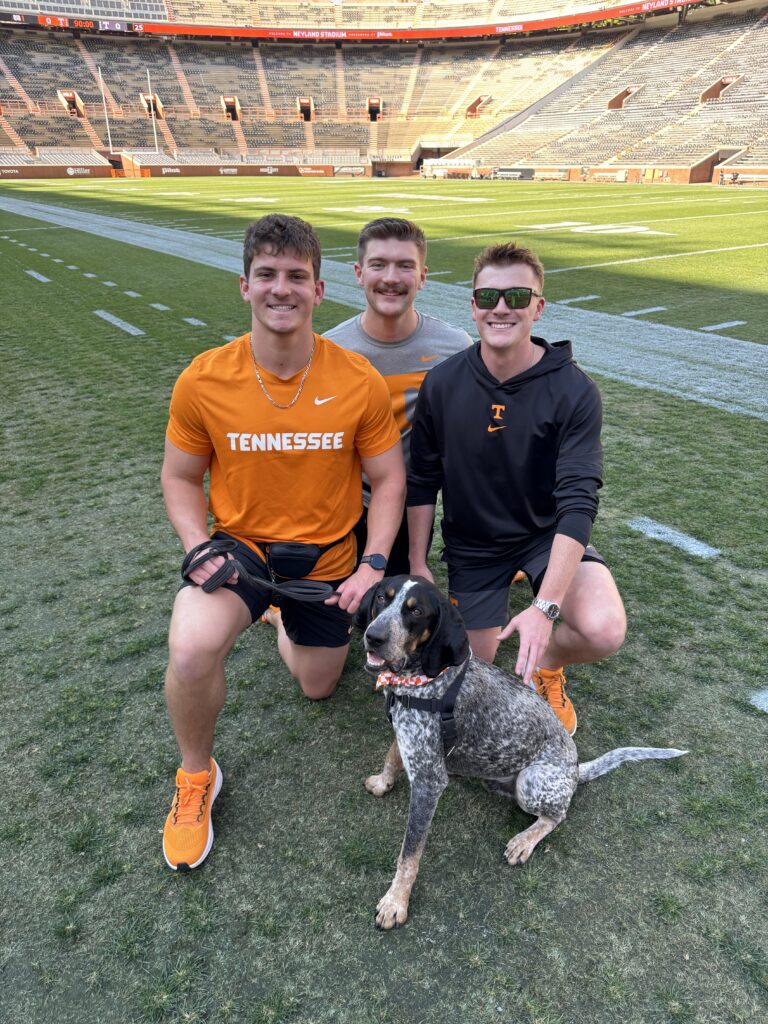
The handlers are living out every Tennessee fan’s childhood dream of running through the T. While working with a live mascot is a visible responsibility, behind the scenes, it is hands-on training in behavior, communication, and advocacy. “I think that Neyland will teach me more than I’ll teach him,” says Katzakian. “I’m excited to learn and mature through this opportunity and always do what’s best for the dog.”
Smokey XII offers a reminder that excellence can come from unexpected places. His journey to becoming Smokey XII is not defined by a deadline but by a process: one rescue dog, one veterinary-led program, and three student handlers learning alongside him every step of the way.
Explore More on
Features
MORE FROM THIS ISSUE