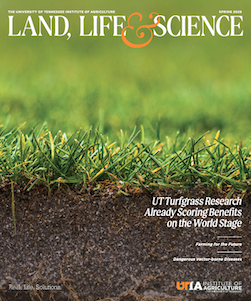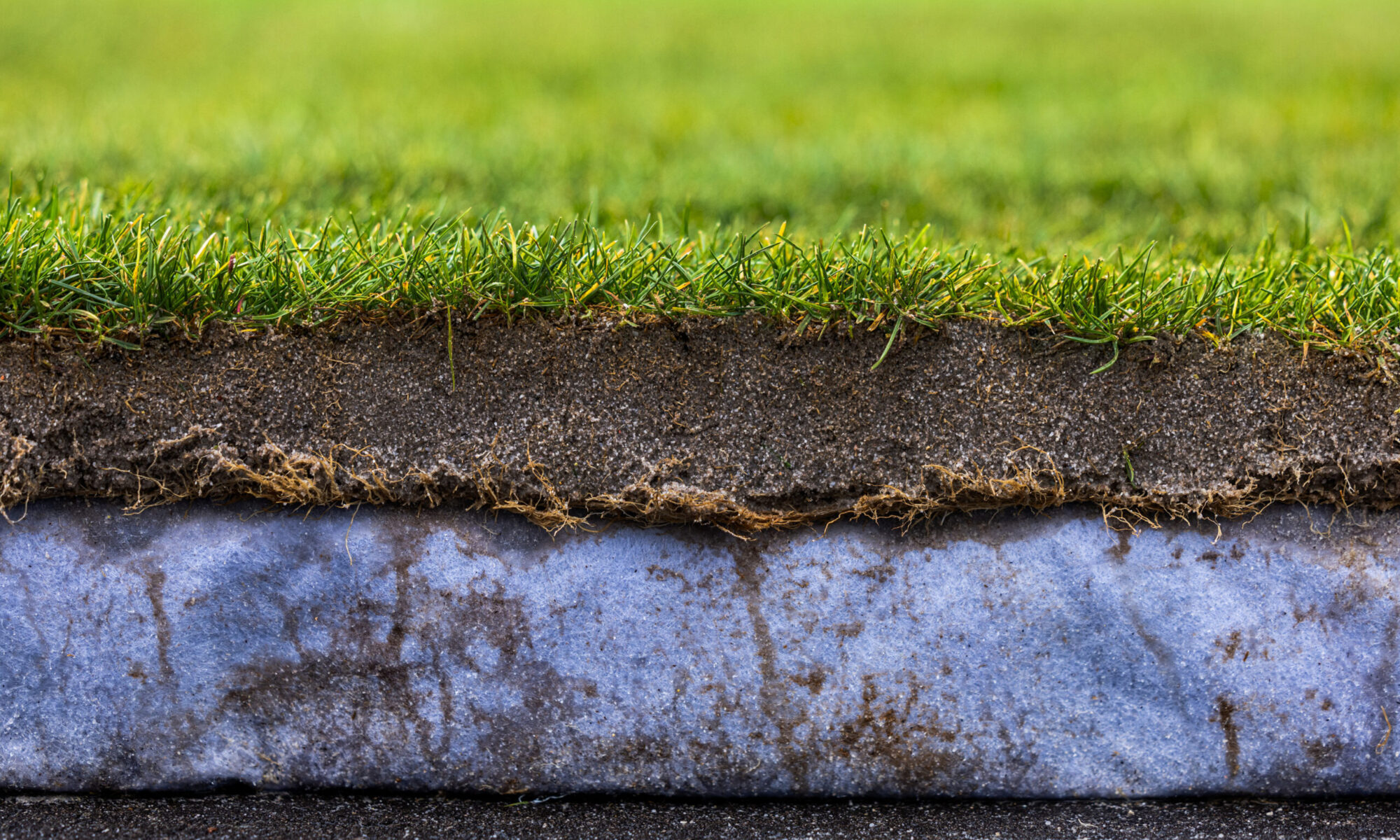
When FIFA selected UT to oversee research for building and maintaining the FIFA World Cup 26TM pitches, it promised to focus worldwide attention on the turfgrass science and management program.
But, even now, before the world’s most-watched sport tournament begins in June, UT’s collaboration with the Fédération Internationale de Football Association is bringing new recognition to the already-acclaimed turfgrass program. The research—led by John Sorochan, who is the Distinguished Professor of Turfgrass Science and Management in the Department of Plant Sciences—is also yielding information that will result in improved parks, recreation fields, and sports turfs at schools and universities.
“It’s been an incredibly important initiative,” says Keith Carver, UT Institute of Agriculture senior vice chancellor and senior vice president. “It takes the work of our faculty and researchers to audiences all over the world. But, in an equally important manner, our work with FIFA has ushered in new advances to turfgrass that have improved golf courses, yards, and gardens all over the Volunteer State. The impact of this research reaches far and wide.”
More Research, Training Opportunities
In 2021, FIFA initiated a five-year project with UT and Michigan State University for help in producing optimum playing surfaces for the sixteen stadiums and nearly 150 practice fields for FIFA World Cup 26. Forty-eight national teams will play at venues in Canada, Mexico, and the US, spanning four time zones and multiple climatic regions.
Since then, UT researchers have been growing test plots of grass, experimenting with ways of installing grass over different surfaces in varying conditions, and testing surfaces for the best playing and safety conditions. FIFA funded the construction of climate-controlled test fields at the Plant Sciences Unit of the East Tennessee AgResearch and Education Center in Knoxville.
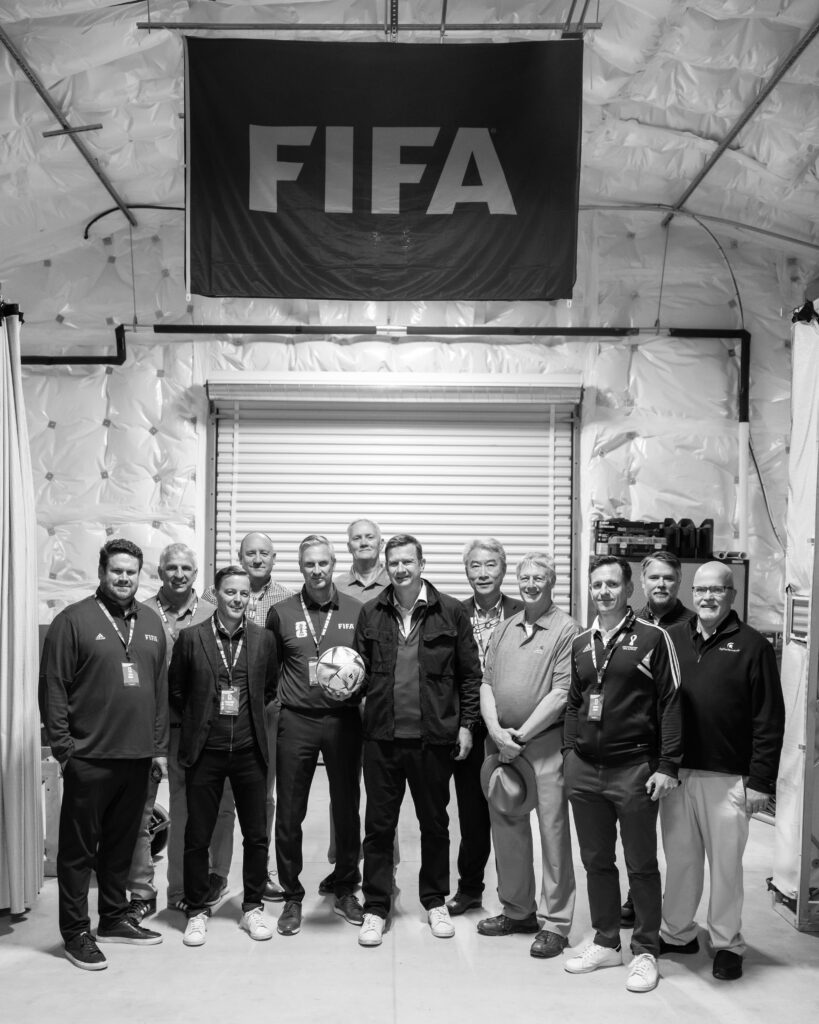
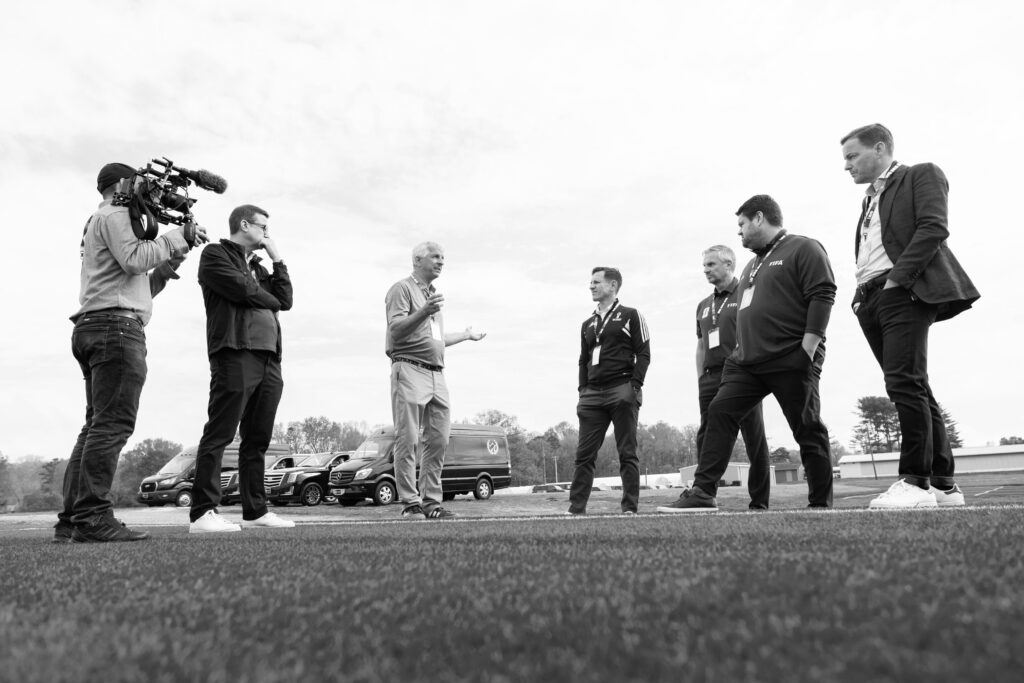
Alan Ferguson, FIFA senior pitch management manager, says UT’s research was used in the inaugural Club World Cup, an international competition organized by FIFA, held last summer at a dozen stadiums across the United States.
“With half of the (Club World Cup and World Cup) games going into stadiums not used for hosting soccer, we had some unusual challenges,” he says. Those challenges included temporarily converting artificial turf fields to natural grass fields.
“The UT turf team is well known around the world for high-quality research,” Ferguson says. “With so many key technologies already under research at UT, it made sense for FIFA to partner and extend this research.”
Ferguson adds that FIFA is looking at continuing its collaboration with UT beyond the FIFA World Cup 26.
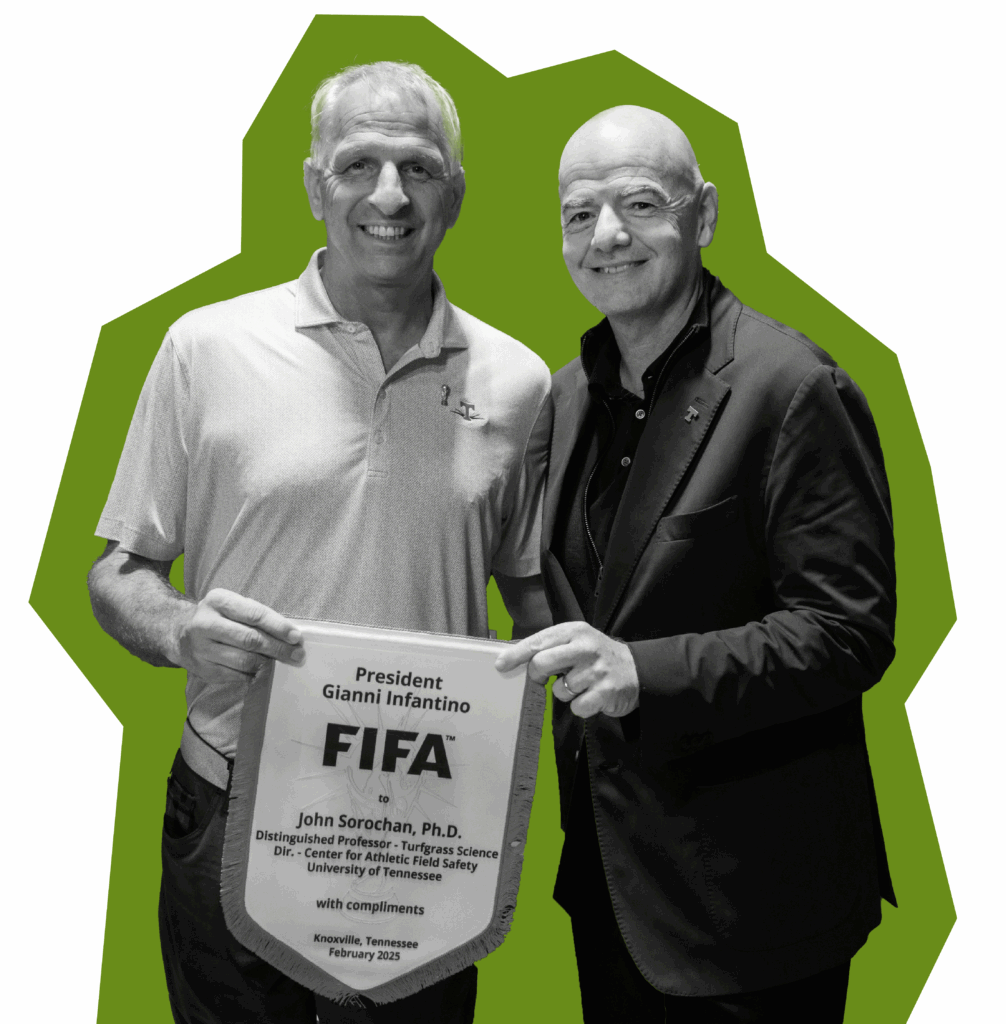
“Our major tournaments will only grow bigger and continue to challenge us in many ways,” he says. “Having established the program (with UT), it makes sense to carry on the good work.”
Sorochan says he’d love to see UT engaged with upcoming World Cup tournaments. FIFA World Cup 2030 will be played in Morocco, Portugal, Spain, Argentina, Paraguay, and Uruguay. The World Cup 2034 will be held in Saudi Arabia. In these places, “fresh water is at a premium” so subsurface irrigation research will be critical, he says. Sorochan says he’d also like to see UT become a FIFA training site. “FIFA has academies for referees, trainers, and coaches,” he explains. “We’d like to see them include the next generation of pitch managers.”
Sorochan says UT is establishing certificate programs for pitch managers, golf course superintendents, and those who oversee other sports venues.
John Stier, Herbert associate dean, says the college is working to launch one or more certificate programs for turfgrass science, including specializations for sports turf. The program is intended to have a state, national, and global audience and will be open to current college students. Participants will receive college credit for each course. Students who complete the program will receive an official transcript from UT. Coursework may be used toward a college degree.
“Such a certificate could be useful to students in multiple colleges, including students studying sport management and business,” Stier explains.
UT Extension currently offers the non-credit, online Certified Lawn Care Professional Program on general turfgrass management. The program is tailored for working professionals seeking to augment their knowledge of regional turfgrass management and who do not need or intend to use the training for a college certificate or degree program. Participants in this program do not have to submit homework or take quizzes and exams, or develop other types of work typically associated with college programs. Participants who finish the program receive a certificate of completion from UT Extension, though no college credit or transcripts are earned.
UT also is investing in additional turf research fields, which Sorochan says could be used to test specific technologies like heating systems, vacuum ventilation, and subsurface irrigation.

Shaping Student Futures
UT’s turfgrass program is already known for helping students land internships and jobs with top-tier sports organizations, but the World Cup project is upping the ante, offering Herbert College of Agriculture students professional opportunities that span the globe.
For alumnus Ivan Navarrete (BS plant sciences ’23), the partnership transformed his career trajectory. As a student, he started out working at the Tennessee National Golf Club, and he’s now a stadium pitch operations supervisor for FIFA, managing everything from budgeting and procurement to ensuring turfgrass quality across World Cup venues. His FIFA journey began in 2022 in Qatar, where he worked as a turf manager at Lusail Stadium, host of the World Cup final.
“It was my first real exposure to the full scope of FIFA operations,” Navarrete recalls. “The challenges went far beyond turfgrass. They included logistical puzzles, time pressures, and the responsibility of maintaining a surface for the biggest sporting event in the world.”
His involvement in the project led to internships with Football Club Cincinnati and Tottenham Hotspur in London. “The program lets you take your education and truly make what you want out of it,” he says. “Getting to participate in three internships across different locations and climates, each one with its own management practices and values, has been instrumental in my professional and personal development.”
Navarrete says the global exposure built his confidence and changed how he approaches his work. “It’s best to go into each new experience assuming you don’t know it all. Our industry evolves constantly, and you have to be ready to evolve with it.”
In addition to Navarrete, fellow turfgrass sciences and management program alumnus Alex Redd (BS plant sciences ’19) now works for FIFA.
“Working with John (Sorochan) gave them insight into the FIFA program,” Ferguson says. Navarrete helped with some of the FIFA research himself “so he also had that added benefit of knowledge when we started to roll out the trials into the real world.”
Although Redd graduated before the current World Cup project, he credits Sorochan with helping him get the job.
“That’s such a testament to him,” says Redd, who is now a Southeast USA training site manager for FIFA. “He’s so well-connected and respected and has worked across so many parts of this industry.”
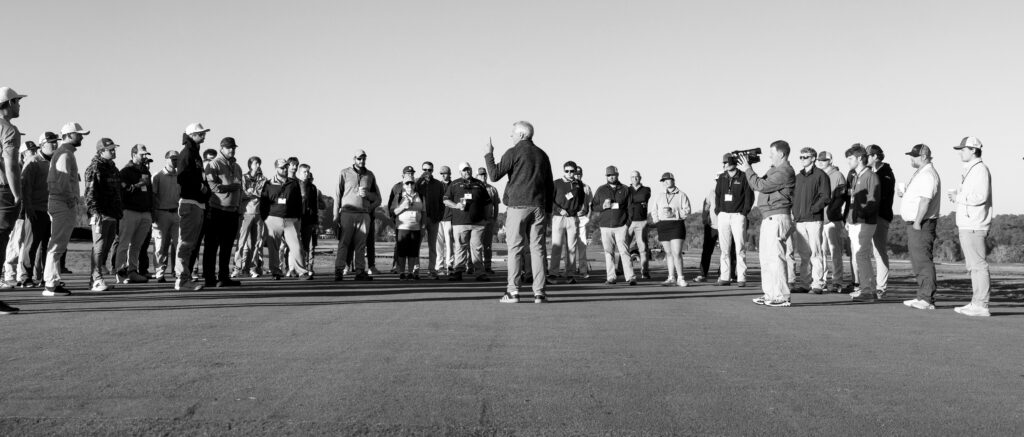
Current student Rose Gibbons, an undergraduate research assistant in turfgrass science, is also benefiting from the FIFA project. From maintaining test plots to networking at national conferences like the Golf Course Superintendents Association of America Conference and Trade Show and the Sports Field Management Association Annual Conference and Exhibition, the experience has reshaped her career goals.
“I’ve met leading women in the turf industry and even worked at Augusta National during overseeding week,” she says. “I used to dream of managing a field one day—but now I’m seriously considering a career in research.”
Garrett Willard, another undergraduate researcher, focuses on growing turfgrass in indoor environments under artificial lighting, which is a crucial aspect of World Cup field management. His work has taken him to Atlanta, Miami, and Orlando, and earned him a 2025 internship with the Philadelphia Eagles.
He’s also helped host field days to showcase UT’s turfgrass research to industry professionals and fellow students. “Working on a project of this scale exposes us to real-world demands and international collaboration,” Willard says. “I’ve learned from professionals from Mexico, Australia, and England, and that global perspective is something I’ll carry into my career.”
Gibbons adds that the project gives Herbert students a competitive edge. “We’re learning how turf behaves in different climates and environments, which is exactly what employers are looking for.”
For Navarrete, the FIFA project didn’t just lead to a dream job; it helped him find a purposedriven career. “I want to help create safer playing surfaces for athletes everywhere,” he says. “This program helped me find meaningful work that doesn’t feel like work at all.”
Sorochan has watched these transformations up close. “I get emotional seeing how hard these students work,” he says. “We’re not just preparing fields and conducting groundbreaking research. We’re preparing them for their futures.”
As UT’s collaboration with FIFA continues through FIFA World Cup 26 and beyond, one thing is clear: this is more than just grass. It’s global experience and life-changing mentorship. And it’s an open door to careers these students once only dreamed of.
Stier says publicity about the FIFA project is drawing interest from prospective students and faculty: “Knowing the university is doing something with FIFA adds to the UT cachet.”
Spillover Benefits
Sorochan says World Cup research will benefit the sod industry through improved production methods, such as growing sod on plastic so it can be cut and transported with roots intact. That will benefit sports venues that use turf, like golf courses.
Thanks to this new technology, Sorochan adds, “Golf course turf managers can replace their whole driving range in one day.”
UT also is looking at innovative field construction methods, such as shallow-profile sports fields, which are more economical to construct because they require fewer products yet still perform and play the same.
The researchers also are investigating ways of using less water to maintain natural grass, which could make the maintenance of parks, recreational fields, and high school playing fields cheaper and more environmentally sound.
“And we’ve come up with ways of testing and measuring the playability of the surface,” Sorochan says. “We can make fields better and safer.”

Explore More on
Cover Articles
MORE FROM THIS ISSUE