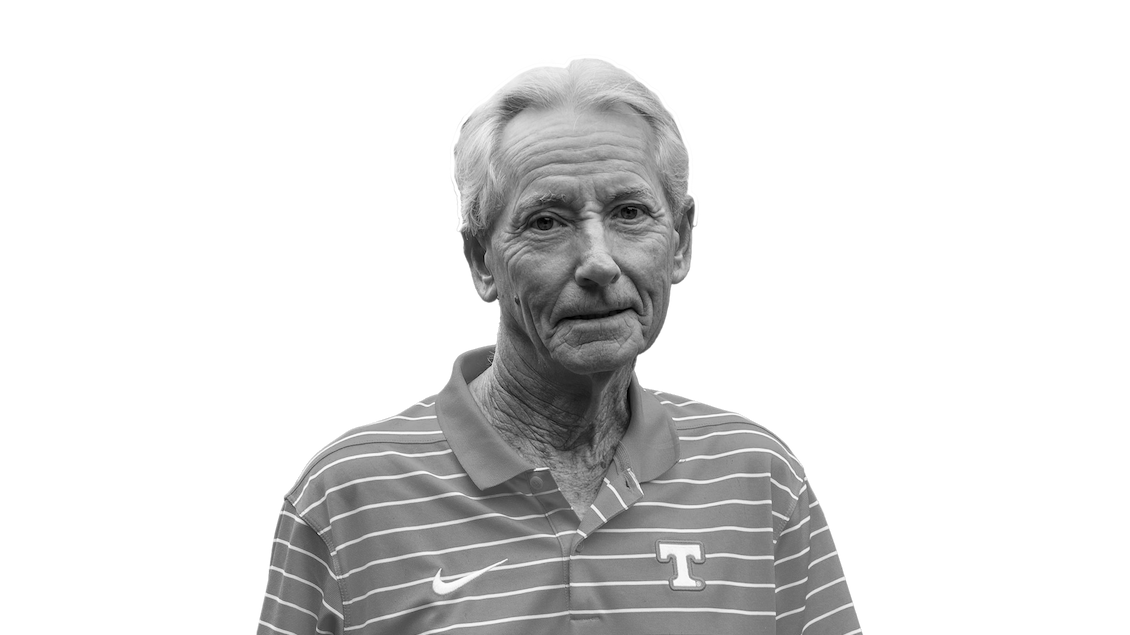
Ornamental Horticulture and Landscape Design ’71
David Stone’s first round of golf was at a backyard birthday party. The hosts had sunk a few tin cans into the ground, and the kids took turns putting balls through the tall grass, and that’s all it took to get him hooked.
This was in the early 1960s, around the same time golf was first being televised and Arnold Palmer was becoming a household name. Back at his family’s dairy farm in Lewisburg, Tennessee, Stone would practice on his own in the winter and early spring, before the grass grew too thick, and he soon started hanging around local courses, where he would introduce himself to workers and ask questions about the grass. When he stumbled upon an article in a golf magazine about the science of turf management, his life’s course was set.
Sixty years later, David Stone is a legend of the golf world—the first superintendent inducted into the Tennessee Golf Hall of Fame and recipient of both the US Golf Association’s Green Section award and the Tennessee Turfgrass Association’s Tom Samples Professional of the Year award. By the time he retired in 2016 after thirty-four years at the renowned Honors Course, a private golf course near Chattanooga, Stone had mentored more than twenty people who have gone on to become golf course superintendents elsewhere and was renowned for being the man who brought Zoysia spp. grass to the South.
Stone is quick to note an early mentor of his own. He arrived at UT the same year that the Ellington Plant Sciences Building opened and quickly attached himself to turfgrass professor Lloyd Callahan. “Dr. Callahan was always putting out test plots and trials, and I continued to do that because you don’t know all the answers,” Stone says. “You’ve got to constantly be evaluating.”
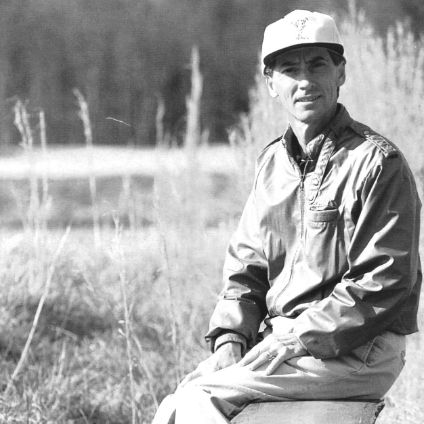
For Stone, the evaluation process was a combination of scientific inquiry and a golfer’s instinct. He would ride around the course every day with a tape recorder and pocketknife, noting hard spots in the greens that needed to be hand-watered, natural areas that needed to be pruned, and imperfections in the cutting that needed to be addressed by the course’s mechanic.
“Your members are your customers,” Stone says. “Maybe my approach comes from the fact that I was a golfer before I decided to get into this business, and I remained a golfer. I was always looking at this from the golfer’s standpoint. And that is something that superintendents often miss. Not all of them. There are some great superintendents who don’t play golf. But, for the most part, the ones who play golf are more in tune.”
Explore More on
Great Grads
MORE FROM THIS ISSUE