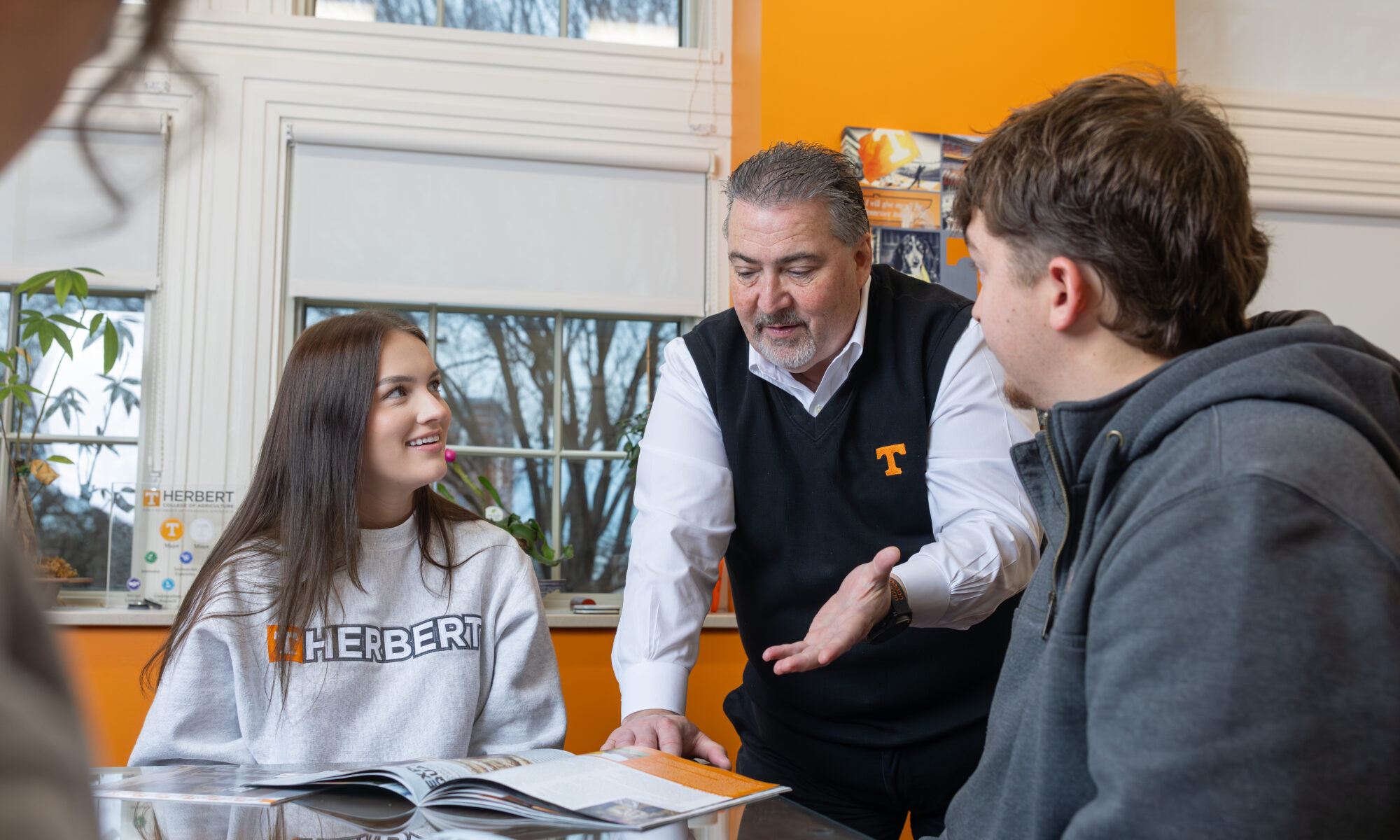
David White Reflects on His First Year as Dean of Herbert
Time flies when you’re having fun, especially as dean of a growing college at a top-tier institution. David White reflects on his first year leading the Herbert College of Agriculture—one filled with learning, listening, and building relationships across the campus and state.
What have been your biggest accomplishments since stepping into the role?
The top of my list would be our new faculty and staff hires. They are the driving force that provides energy, support, and inspiration for Herbert to become a destination for students pursuing careers in agriculture, natural resources, and construction science and management. Last year, we experienced the largest number of applications ever and a dramatic increase in student enrollment over the past four years. This is due to our incredible staff and faculty who truly believe in the Volunteer ethos and live it every day.
How do the enrollment increases impact Herbert?
We are investing in new programs and welcoming outstanding new faculty and staff. These additions allow us to expand opportunities for our students through cutting-edge research experiences, enhanced advising and support, and a new curriculum that reflects the evolving needs of agriculture, natural resources, and construction science and management. Increased enrollment symbolizes the trust students and families place in us. It drives us to continue building a vibrant, student-centered community where every individual has the resources, mentorship, and experiences they need to succeed.
What new programs are on the horizon for the college, given student interest and job market trends?
We are focused not only on current strategic priorities but also on what Herbert needs to look like in 2030 surrounding student success, faculty expertise, and academic programming. We plan to deliver innovative, high-quality academic programs connected to precision agriculture, leadership and policy, outdoor recreation and parks management, fermentation sciences, agricultural bioinformatics, and biotechnology.
How are you addressing student support, especially in terms of mental health, advising, and career development?
Student success extends beyond the classroom. We continue to work closely with campus partners to expand access to mental health resources and create a culture where students feel supported and encouraged to seek help. In advising, we focus on personalized guidance to help students navigate their academic pathways with confidence. Through various career development initiatives like internships, mentoring, and employer partnerships, we equip students with the tools and experiences they need to thrive in their chosen fields. Our goal is to care for the whole student by ensuring they are healthy, supported, and prepared for success during their time at Herbert and beyond.
Amid growing enrollment, what is Herbert doing to ensure it continues to feel like home to students?
With only a bridge separating the UTIA campus from the rest of the campus, Herbert students experience a small community with all the benefits of attending a large Southeastern Conference university. They find belonging through our thirty-plus student organizations, our Herbert Life Living and Learning Community for freshmen, personalized advising, and strong connections with faculty and staff who know them by name and care about their success. Be it a first-time first-year freshman, transfer student, veteran, or first-generation student, we are committed to making Herbert home for all Volunteers.
What is your vision for Herbert five to ten years from now?
As we revise Herbert’s strategic plan, we seek to develop and promote a compelling educational environment that attracts and retains students. Our goal is to meet or exceed enrollment targets while creating a student life experience second to none. Undergraduate research, artificial intelligence and automation, robust career development— these are some of the things that will drive Herbert forward in the coming years. My commitment is to educate future leaders in agriculture, natural resources, and construction science and management, and instill in all of them the value of giving back. Hopefully, when they achieve success, they will feel inspired to support and empower the generations that follow.
What are growth opportunities for the college?
Last year, we engaged Hanover Research in an academic portfolio optimization effort to explore and develop lucrative areas of study that would distinguish us from other peer institutions with a college of agriculture. Horizon scanning identified several emerging programs that show high-growth student demand. In response, we recently established the outdoor recreation and park management concentration, changed the environmental and soil science major to environmental science, hired a fermentation scientist and a viticulturist, and plan to launch a bachelor’s degree in bioinformatics, which would be unique to the Southeast region.
What do you like to do when you’re not busy being the dean?
I enjoy spending time with my family, exploring Knoxville and our surrounding communities in East Tennessee, and cheering on our Volunteers in all avenues of competition.
Explore More on
Features
MORE FROM THIS ISSUE